
Personalized Space Books: Name, Avatar, or Your Child's Real Photo as the Astronaut?
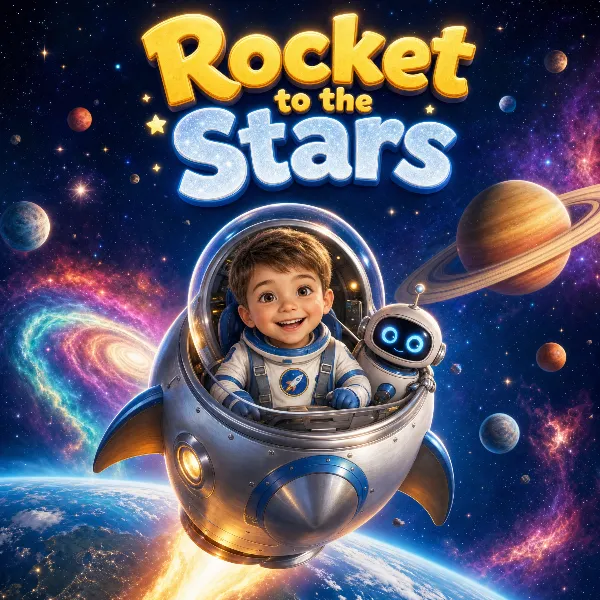
Few things fire a small child's imagination like space. Rockets, the silence of the Moon, a helmet of your very own — it's the setting kids draw on every scrap of paper they can find. So a book where your child is the astronaut — not a generic cartoon kid, but the specific human who insists on wearing the cardboard-box spaceship to breakfast — is a genuinely special gift.
The catch is that "personalized space book" describes wildly different products. Two books wearing that exact label can range from a name dropped into pre-written text to a photo-realistic version of your child floating past the rings of Saturn. This guide breaks down the three ways a space book actually gets personalized, what each one trades off, and how to choose the right one for your child's age — with every competitor note dated, because these brands change their lineups often.
The three ways a space book gets "personalized"
1. Name-insertion (the classic)
The story is pre-written with a placeholder, and your child's name is dropped into the text — sometimes cleverly, so the stars or rocket contrails spell out the letters of the name across the pages. The illustrated astronaut is a fixed, generic character on every page; what changes is the words.
I See Me! is the best-known name in this category and runs a dedicated Outer Space line (as of July 2026). Their whole catalog is built around name-based personalization — their flagship is literally My Very Own Name — and they're a long-established mass-market brand with a strong track record and fast shipping. If your child is a toddler who lights up simply at seeing their own name in a real printed book, this approach is charming and hard to beat on price.
Strengths: inexpensive, quick, and delightful for the under-5 set who mostly want to see their name in print.
Trade-offs: the child in the pictures isn't your child — same generic face for every kid who buys the book. The personalization is the text, not the hero.
2. Build-an-avatar (choose the features)
A step up in likeness: you assemble an illustrated character by picking skin tone, hair color and style, sometimes glasses or freckles, plus the child's name and gender. The astronaut now roughly resembles your child, and the character is consistent from page to page.
Wonderbly's The Incredible Intergalactic Journey Home is the standout space title in this camp, and it deserves genuine credit. As of July 2026 it builds an illustrated child-astronaut (you choose the character and name) and, in its signature twist, personalizes the ending with the child's real home — the rocket journeys back through the galaxy and lands at your actual address using map and satellite imagery. That home-coordinates reveal is a legitimately magical piece of personalization that photo-swap books don't attempt, and it's the reason the book has stayed a gift-guide staple for years. Other illustration-based options exist too, like name-and-feature astronaut books from smaller studios and marketplace sellers.
Strengths: the character resembles the child, art is professionally consistent, and clever mechanics (like Wonderbly's location twist) can add real wow. Good for kids who enjoy a stylized, storybook look.
Trade-offs: it's still an illustration — a representation of your child, not their real face. Two children with similar features can end up with near-identical astronauts.
3. Photo-real AI face-swap (the child's actual likeness)
The newest approach. You upload a single clear photo, and the child's real face — their actual features, not a cartoon approximation — is rendered into every illustrated scene. Done well, a grandparent recognizes the child instantly: that's them in the helmet, floating in the capsule.
This is the approach TinyTales takes with Rocket to the Stars. One uploaded photo becomes a photo-realistic, cinematic version of your child (not cartoonified, and kept consistent from page to page) placed inside the spaceship and out among the planets. If you want to understand exactly how this differs from name-only and avatar books, our explainer on AI photo personalization versus avatars and photo insertion walks through the full spectrum.
Strengths: the strongest "it's really them" reaction, and the highest keepsake value for that reason.
Trade-offs: it depends on a good source photo — a clear, well-lit, front-facing shot works best — and it's typically priced above a simple name-insertion book because there's real per-book image generation behind it. For a space-mad four-year-old, though, seeing their own face behind the visor is hard to top.
Honest comparison: which approach wins for what
No single approach is "best" — it depends on the child, the occasion, and your budget. Here's the fair version.
| What you care about | Best approach | Why |
|---|---|---|
| Lowest price / fast toddler gift | Name-insertion (I See Me!) | Cheapest, charming for under-5s, established brand |
| A clever, unique mechanic | Avatar (Wonderbly) | The home-address landing is genuinely special |
| "It's actually my child" likeness | Photo-real face-swap (TinyTales) | Real face in every scene, top keepsake value |
| The child driving the story | Branching photo-real (TinyTales) | Child is the hero and the decision-maker |
If a competitor is a better fit for your situation, buy theirs — an honest guide is more useful than a sales pitch, and it's the reason a page like this is worth bookmarking.
Where TinyTales' Rocket to the Stars is genuinely different
Two things set the TinyTales space book apart, and both are worth being precise about.
First, the likeness. Because it's a photo-real face-swap rather than a chosen avatar, the astronaut is unmistakably your child. That's the difference between a book that resembles a kid with the same haircut and a book that is your kid, in orbit.
Second — and this is the part almost no space book does — the child makes the decisions. Rocket to the Stars is a choose-your-own-adventure. At key moments the young astronaut has to choose: help the stranded satellite or race for home; be brave at the airlock or ask the crew for help. The reader picks, and the story branches. That turns a passive read-aloud into a rehearsal of small acts of courage and problem-solving. We wrote about why that mechanic matters in how personalized books teach kids decision-making and why choices matter in interactive books.
It's available as a hardcover or paperback keepsake, with an optional digital copy and a matching coloring book — so the same personalized adventure can be a screen-free bedtime story, a shelf keepsake, or both.
How to choose by age
- Ages 2–3: Keep it simple and sturdy. A name-insertion or photo-real book with short text and a clear, single-idea plot ("blast off, see the Moon, come home") is plenty. The thrill is recognition — their name, their face.
- Ages 4–6: The sweet spot for an astronaut adventure with choices. Kids this age love agency; a branching story where they decide the mission's next step keeps them re-reading. Photo-real likeness lands hardest here.
- Ages 6–8: Early readers want a bit more plot and stakes. Look for a longer story, a real problem to solve in space, and a satisfying arc — the choose-your-own-adventure format gives this age replay value as they hunt for the paths they didn't take.
How to pick the best photo (for photo-real books)
If you go the photo-real route, the source photo does most of the work. A clear, well-lit, front-facing shot of the child's face — eyes open, no heavy shadow, nothing covering the face — face-swaps far better than a distant or dim snapshot. One good photo beats ten mediocre ones.
The bottom line
"Personalized space book" hides three very different products. Name-insertion is the budget-friendly, toddler-pleasing classic — and I See Me! does it well. Avatar books like Wonderbly's Intergalactic Journey Home add real cleverness, especially that home-address landing. And photo-real face-swap books like TinyTales' Rocket to the Stars go furthest on "it's really them," with the added twist of letting the child steer the mission themselves. Pick the one that fits your child's age and your budget — and if that's someone else's book, wonderful. If you want your child's actual face behind the visor, making the calls on their own space adventure, that's the one we make.
See your child in the story
Upload one photo and see Rocket To The Stars with their real face in the pictures, before you pay.
Preview their book freeFrequently asked questions
Is there a personalized space book that uses my child's actual photo?
Yes, though it's the newest of three approaches. Some space books add a small inset photo beside a name-based story, some generate an illustrated cartoon astronaut from a photo, and the most advanced render a photo-realistic version of your child into every scene via cinematic AI face-swap. TinyTales' Rocket to the Stars uses that last approach.
Do personalized astronaut books use a real photo or just the child's name?
Both exist, and 'personalized' covers both. Established brands like I See Me! personalize mainly around the child's name (as of July 2026), Wonderbly's The Incredible Intergalactic Journey Home builds an illustrated character and famously ends at your real home address, and photo-real books place the child's actual likeness in the spaceship. Check exactly what changes before you buy.
What age are personalized space books best for?
Roughly ages 2 to 8. Toddlers love seeing their name and face on a rocket; preschoolers (4–6) enjoy an astronaut adventure with choices and a clear lesson; early readers (6–8) want a bit more plot and stakes. Match the reading level and page count to the child.
Can my child actually be the astronaut hero of the story?
With photo-real personalization, yes — the child appears as the astronaut in every illustration rather than as a generic cartoon. In TinyTales' Rocket to the Stars the child is also the decision-maker: it's a choose-your-own-adventure, so they choose how the mission unfolds.
Are personalized space books good gifts?
They're among the more memorable gifts for a space-obsessed child because the book is literally about them blasting off. They work especially well for birthdays and holidays, where the keepsake value matters as much as the story.